
Can You Put a Gazebo on Grass? What Each Frame Needs
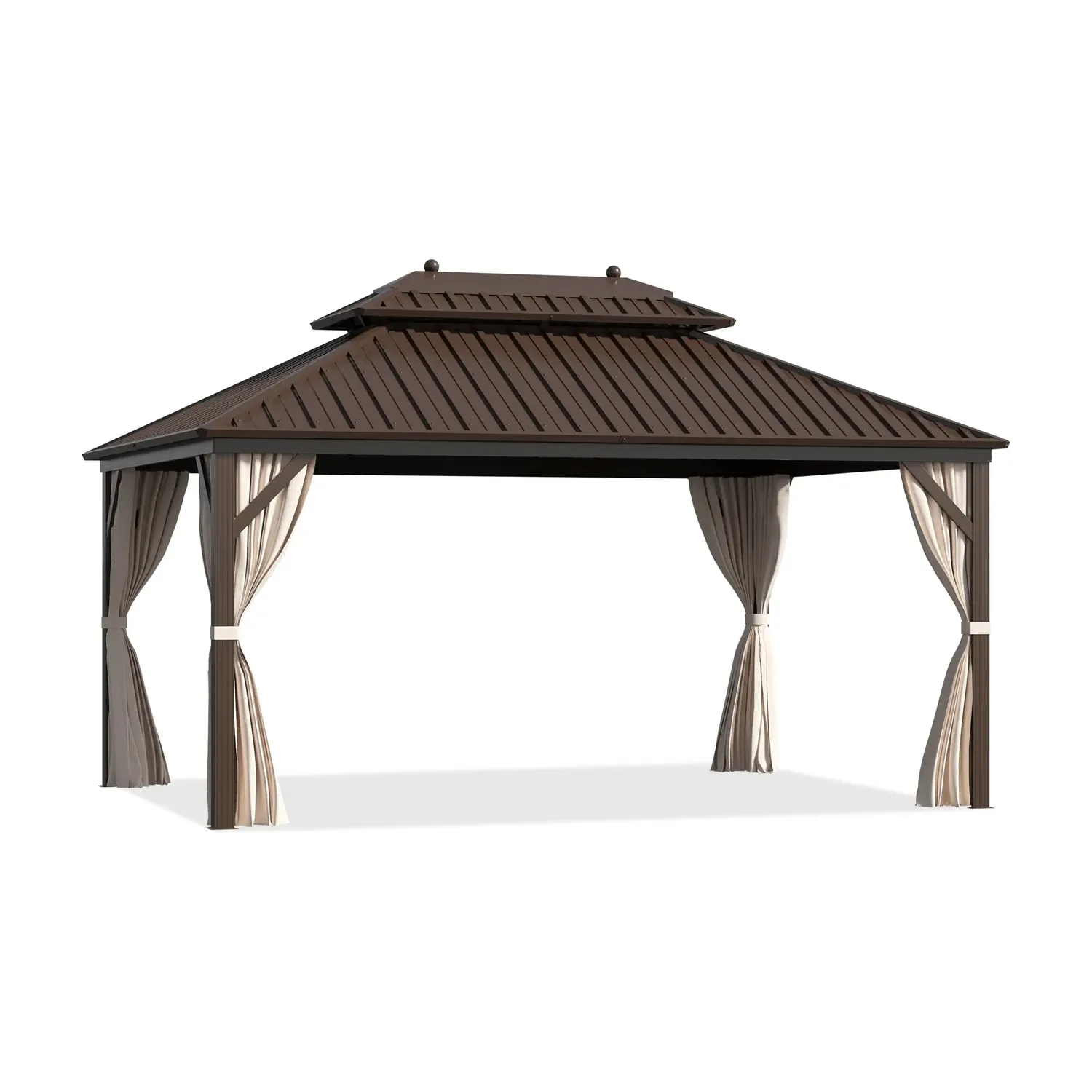
You can put a gazebo on grass only when its product page lists anchors made for soil. Most cedar hardtops in our range ask for concrete, a sound deck or square, level footings instead, and even a kit that ships with ground stakes may still call for a hard surface, so read each page.
What does the anchoring line on a gazebo page tell you?
Every gazebo is held down at its feet, and the feet are where grass causes trouble. A product page usually says what the kit ships with to fix each post, and what it expects that post to sit on. Read that line before you look at roof color or curtain sets. It tells you whether the maker pictured soil or a hard surface under the frame.
Two things matter in that line. First comes the hardware in the box: stakes, expansion screws, concrete anchors or only brackets. Second is the surface the maker names. A kit can include stakes and still ask for a hard base, so the two parts have to be read together. Our gazebo collection holds both kinds, and the difference rarely shows in the photos.
Which gazebo pages say soil is fine?
In our range the clearest case is the Erommy 10 x 13 ft. aluminum hardtop. Erommy packs expansion screws along with ground stakes, so the frame can go onto concrete or straight into soil. That is a written yes for grass, and it comes from the maker, not from us.
Read the rest of its page with a lawn in mind, though. The whole gazebo weighs 260 lb. Erommy lists its wind rating at up to 40 mph, with a snow load given only as under 2 in. A light frame on stakes depends on how firmly the soil holds them. Soft turf after a week of rain grips a stake far less than dry, packed ground, so a staked gazebo on a lawn deserves a look after every storm.
Soft-top frames sold with stakes follow the same logic. When the page names stakes and soil, grass is an option. When it names only a slab or a deck, grass is off the table, whatever the canopy is made of.
Why can a kit with stakes still need a hard base?
A cedar kit from Sunjoy shows how the hardware list alone can mislead. On the Sunjoy Double-Tier Cedar Gazebo 10×12, each of the four cedar posts sits in a covered steel anchoring plate and is held with ground stakes. Yet Sunjoy’s own advice is to build it on a wood deck or on concrete, not on soil, and to anchor it there.
So the stakes on that page belong to an anchoring system meant for a firm surface. They do not make the lawn an approved base. Sunjoy’s published figures are 50 mph of wind and 3,000 lbs of snow load. If you set it on soil anyway, you are working outside what the maker describes, and those numbers tell you little about your own setup.
What do the cedar hardtops ask for under their posts?
Most of our cedar hardtops are written for concrete or a deck from the start. The Backyard Discovery Barrington 12 x 10 needs a square, level base, and the hardware for a concrete slab comes in its kit. A wood deck takes fasteners you buy separately. Before fixing it to a deck, Backyard Discovery wants owners to confirm there is enough structure beneath the boards. Its 100 mph wind rating counts only when the gazebo is anchored per the manual, which is one more reason not to improvise on turf.
Yardistry takes a stricter line. The Yardistry 12 x 14 ft. Meridian ships with post mounting brackets but no anchoring hardware, because the right fasteners change with what sits underneath: concrete, pavers or a deck. Grass is not on that list. Its 6 x 6 in. posts each stand on a post base. Three cartons come to 633 lbs together, so plan a footing to bolt into before the boxes arrive. Yardistry also offers footing and permit drawings as downloads for this size.
Frame material does not settle the question on its own. An aluminum frame can ship with stakes for soil, and a cedar frame with stakes can still ask for concrete, as the pages above show. Look up the exact model and size, then read its anchoring line.
Can pavers or gravel stand in for a slab?
Sometimes, and again the page decides. On the Yardistry Meridian, pavers are one of the surfaces the maker expects its anchors to go into, so a solid paver patio fits what that page describes. Gravel is a different case. None of the pages above names loose gravel as a base, so ask the maker before you plan on it.
Whatever the surface, square and level matter as much as the material. A frame set out of square puts stress on joints and roof panels during the build. On a lawn, check level at each post spot, since turf that looks flat often is not.
How should you prepare a lawn for a gazebo that allows stakes?
Pick the flattest, firmest patch of the yard, away from low spots where water collects. Mow it short and look for roots and soft ground before you mark the posts. Have buried lines marked before any stake goes in. Our guide on where to put a shed covers whom to call, and the same steps apply to a gazebo.
After assembly, drive each stake fully home and check that no post foot rocks. Walk around the frame after strong wind or heavy rain, when soil gives the least grip. If a stake lifts, reset it before the next storm. Curtains and netting catch wind like a sail, so tie them back when a blow is coming.
Local rules can apply to a staked gazebo as well as a bolted one. Ask your town’s building office and, if you have one, your HOA whether a gazebo on the lawn needs approval and where it may stand. For help choosing a roof and frame type in the first place, our gazebo buying guide walks through the options. If a kit turns out wrong for your yard, our refund and returns policy covers items that are unused and still in their original packaging.
Frequently asked questions
Do ground stakes mean a gazebo can go on grass?
Not always. Stakes in the box show only part of the anchoring plan. Some makers pack stakes and still advise a deck or concrete rather than soil, so check which surface the product page names before you set the frame on a lawn.
Can a cedar hardtop gazebo sit directly on a lawn?
Plan a firm base first. The Backyard Discovery pages ask for a square, level base and give their wind and snow ratings only for posts anchored per the manual. Sunjoy advises a deck or concrete rather than soil, so neither maker describes a lawn.
Is a lawn level enough for a gazebo?
Rarely without some work. Lawns that look flat often slope or dip more than you would guess. Lay a long, straight board between post spots and set a level on it. Add soil under the low side or scrape the high side until every foot rests flat.
Will a staked gazebo harm the grass underneath?
Grass under any roof gets less sun and rain, so expect it to thin over a season. Stakes leave small holes when pulled. If the gazebo will stay in one spot for years, a paver pad may suit it better than turf, where the maker allows pavers.
Will my town want a permit for a lawn gazebo?
Your town and your HOA decide that, and the surface under the frame may not change their answer. Call the local building office with the gazebo’s size and ask whether it needs approval and how far it must sit from property lines.