
Power to a Gazebo: Outlets, GFCI and Weatherproof Covers
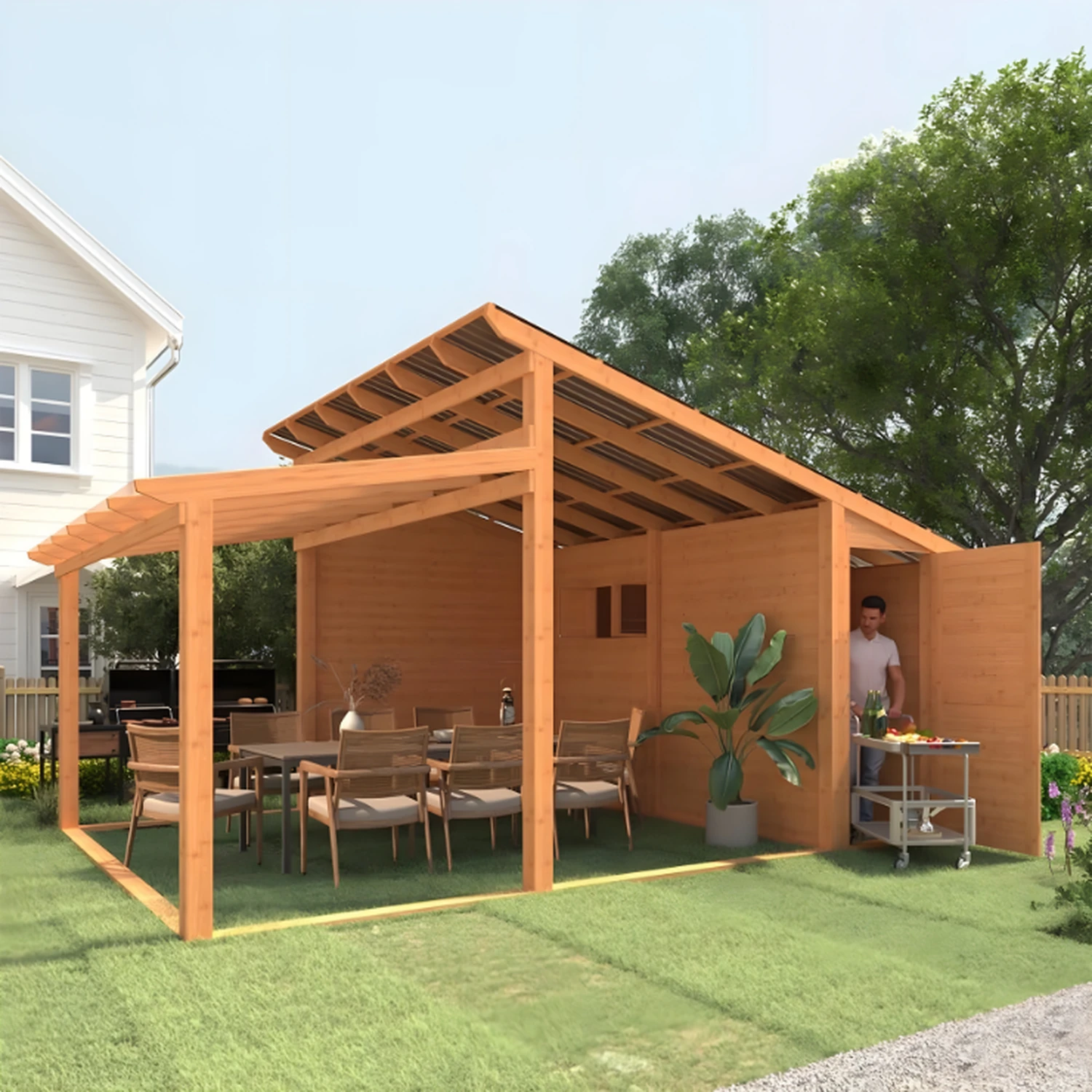
You can bring power to a gazebo, but it has to arrive the way the electrical code expects for outdoor use. In plain terms that means ground-fault (GFCI) protection on the outlet, a receptacle rated weather-resistant, and a cover suited to how wet that spot gets. A built-in outlet strip on the gazebo does not replace any of that. Backyard Discovery, whose PowerPort is fitted to several models on this site, states plainly that the power source is not included. And the local inspector, not the kit, decides how the supply has to be installed.
What a built-in outlet strip actually gives you
Backyard Discovery’s PowerPort is the most common example. The maker describes it as three 120-volt electrical outlets and three USB ports in one unit that mounts to any post on the structure, with the power source not included. You will find it on the Arcadia 14 x 12 ft. gazebo, on the Delray 14 x 10 ft. pergola and on the Beaumont and Evanston pergolas.
What it solves is the last few feet: no extension cord draped across the floor, and outlets at a sensible height on a post. What it does not solve is where the electricity comes from. Before you buy, read the PowerPort section of the instruction manual so you know exactly how it connects. Then plan the supply that feeds it with someone who can tell you what your jurisdiction requires.
The three outdoor rules that matter most
The International Association of Electrical Inspectors (IAEI) has published a clear explanation of how the National Electrical Code (NEC) treats outdoor receptacles. Three ideas from it apply to almost every gazebo.
GFCI protection. The common 15- and 20-amp, 125- and 250-volt nonlocking receptacles installed for outdoor use should have Class A ground-fault circuit-interrupter protection. A GFCI cuts the power when current leaks somewhere it should not, for example through a damaged cord or water inside the receptacle. That is also why an outdoor GFCI sometimes trips during wet weather: water getting into a box can cause a nuisance trip.
Weather-resistant receptacles. IAEI’s examples of receptacles for damp and wet locations carry a “WR” marking on the face, which shows they are rated weather resistant. NEC section 406.9 is the part of the code that covers receptacles in damp and wet locations.
The right cover. This is where a gazebo gets interesting, because the answer depends on whether the spot counts as damp or wet.
Damp or wet: why the gazebo roof does not settle it
In NEC terms, a damp location is sheltered from the weather, is not soaked by it, and sees only moderate moisture. IAEI gives examples such as an enclosed porch or the area under a soffit. A wet location is one exposed to the weather or to saturation with water, and that includes unprotected outdoor spots.
The cover rules follow from that:
- In a damp location, the enclosure has to be weatherproof while the receptacle is covered, meaning with no plug inserted and the lid shut. A standard flip cover can do this.
- In a wet location, the enclosure has to be weatherproof whether or not a plug is inserted. That is the deeper “in-use” or bubble cover that closes over a plugged-in cord.
A gazebo has a roof but usually no walls, so wind-driven rain can reach the posts. Whether a given post counts as damp or wet is a judgment the NEC leaves to the authority having jurisdiction (AHJ): typically the electrical inspector or building official. Ask before you buy covers, not after.
Extension cords are not a permanent supply
A long cord from the house is how many gazebos get power on day one. IAEI’s safety notes cover the common mistakes:
- Do not run cords through doorways or windows.
- Use equipment, lights and decorations rated for wet or damp locations when they are outdoors.
- Size the cord for the load. IAEI warns that light cords, 16 AWG and smaller, may not carry a heavy load safely and can overheat.
- Inspect cords and lights for damaged insulation, missing ground prongs or broken lamps, and stop using anything damaged.
Holiday lighting is treated as temporary wiring under the NEC, limited to 90 days from installation. If you want lights on the gazebo all year, plan them as a permanent installation.
Permits, utilities and overhead wires
Small accessory structures are often exempt from a building permit, but IRC-based exemption lists, such as the one published by the City of Federal Way, Washington, note that separate permits may still be required for work on exempted items. Electrical work is the usual case. Backyard Discovery’s booklet also tells buyers that a permanent structure may need a building permit, and points them to their local planning, zoning and building inspection offices.
Two more points from the same booklet apply as soon as power is involved:
- Find out where buried utility lines run before you dig or drive a stake. In the US, 811 is the free national call-before-you-dig service, and it asks you to contact it a few business days before any digging.
- Keep at least 6 feet (2 m) of clearance between the structure and any overhead electrical wires.
If you are still choosing a model, our gazebo collection shows which gazebos include a PowerPort.
Frequently asked questions
Does a gazebo with a PowerPort need its own power supply?
Yes. Backyard Discovery describes the PowerPort as three 120-volt outlets and three USB ports that mount to a post, and states that the power source is not included. How it connects is set out in the instruction manual.
Do outdoor outlets under a gazebo need GFCI protection?
IAEI’s summary of the National Electrical Code says the common 15- and 20-amp, 125- and 250-volt receptacles installed outdoors should have Class A GFCI protection.
What kind of outlet cover does a gazebo need?
It depends on whether the inspector treats the spot as damp or wet. A damp location needs a cover that is weatherproof when closed; a wet location needs an in-use cover that stays weatherproof with a plug inserted.
Can I just run an extension cord to my gazebo?
As a short-term measure, use a cord rated for outdoor use and sized for the load, and never route it through a door or window. For lights and power used all season, plan a permanent supply with your local inspector.
Do I need a permit to add power to a gazebo?
Often. Even where a small structure is exempt from a building permit, IRC-based exemption lists note that separate permits may be required for other work, and electrical work is the common case. Your local building department decides.
Sources
- IAEI Magazine, Holiday Lighting & Outside Electrical Receptacles
- City of Federal Way, Residential Permit Exemptions (IRC R105.2)
- Call 811
- Manufacturer product pages and owner documents: Backyard Discovery