
What Not to Store in a Shed: Propane, Chemicals and Fuel
Start with propane: keep cylinders out of the shed entirely. Safety guidance from the propane industry’s education council, republished by the North Carolina Department of Agriculture, says a propane cylinder should never be kept inside a building or any enclosed space, and it names basements, garages, sheds and tents. Pesticides can live in a shed if they are locked away in their original labeled containers and kept where floods and leaks cannot reach water. Flammable liquids belong outside the living area and well away from anything that can ignite them. Almost everything else is a question of how dry, ventilated and secure your particular shed is.
Propane cylinders: the one firm no
The guidance is not hedged. The Propane Education & Research Council’s safety sheet repeats the rule twice: no cylinder indoors, and no cylinder in an enclosed space, with sheds named specifically. The same sheet warns against using outdoor propane appliances, such as portable heaters, grills and generators, inside enclosed areas.
The reasoning is easy to follow. A shed is small and closed, and a door left shut all week gives any leaking gas nowhere to go. Keep the grill cylinder outdoors, as the guidance says, and plan its spot when you plan the grill’s.
Pesticides and garden chemicals: yes, with rules
The US Environmental Protection Agency names a garden shed as an acceptable place for pesticides, provided they are handled properly. Its storage guidance comes down to these points:
- Keep them away from children and pets. EPA’s preferred spot is a locked cabinet in a garden shed or a utility area with good airflow.
- Follow the storage directions on each product label.
- Keep everything in its original container with its label, which carries the directions, ingredients and first aid steps.
- Never pour pesticide into a soft drink bottle or any other container someone could mistake for food or drink.
- Do not store pesticides near food, animal feed or medical supplies.
- Avoid places that flood, or where a spill could reach wells, drains, groundwater or surface water.
- Buy only what you will use soon, rather than stockpiling.
That last flood point is worth a moment of thought before the shed goes up. A low corner of the yard that collects water is a poor home for chemicals, however well the shed is built.
Gasoline and other flammable liquids
The EPA’s guidance also covers flammable liquids: keep them out of the living space and well away from anything that could ignite them. Its examples are a furnace, a car, a grill and a lawn mower. Several of those live in or next to the typical shed. If the mower, the fuel can and the grill all share one small room, you have put the fuel and the ignition sources together.
Practical steps:
- Store fuel only in containers designed for it, closed tightly.
- Keep it on the opposite side of the shed from anything with a motor, a pilot light or a spark.
- Let mowers and other engines cool before you put them away.
- Ask your local fire department whether it limits how much fuel can be kept at a home. Rules vary by jurisdiction.
Grill ash and charcoal
The National Fire Protection Association’s grilling advice ends with what to do afterward: let charcoal cool completely, then put it in a metal container with a lid. Do that outside, not in the shed. Warm ash in a closed wooden building is a fire risk you do not need to take.
What a garden shed is good for
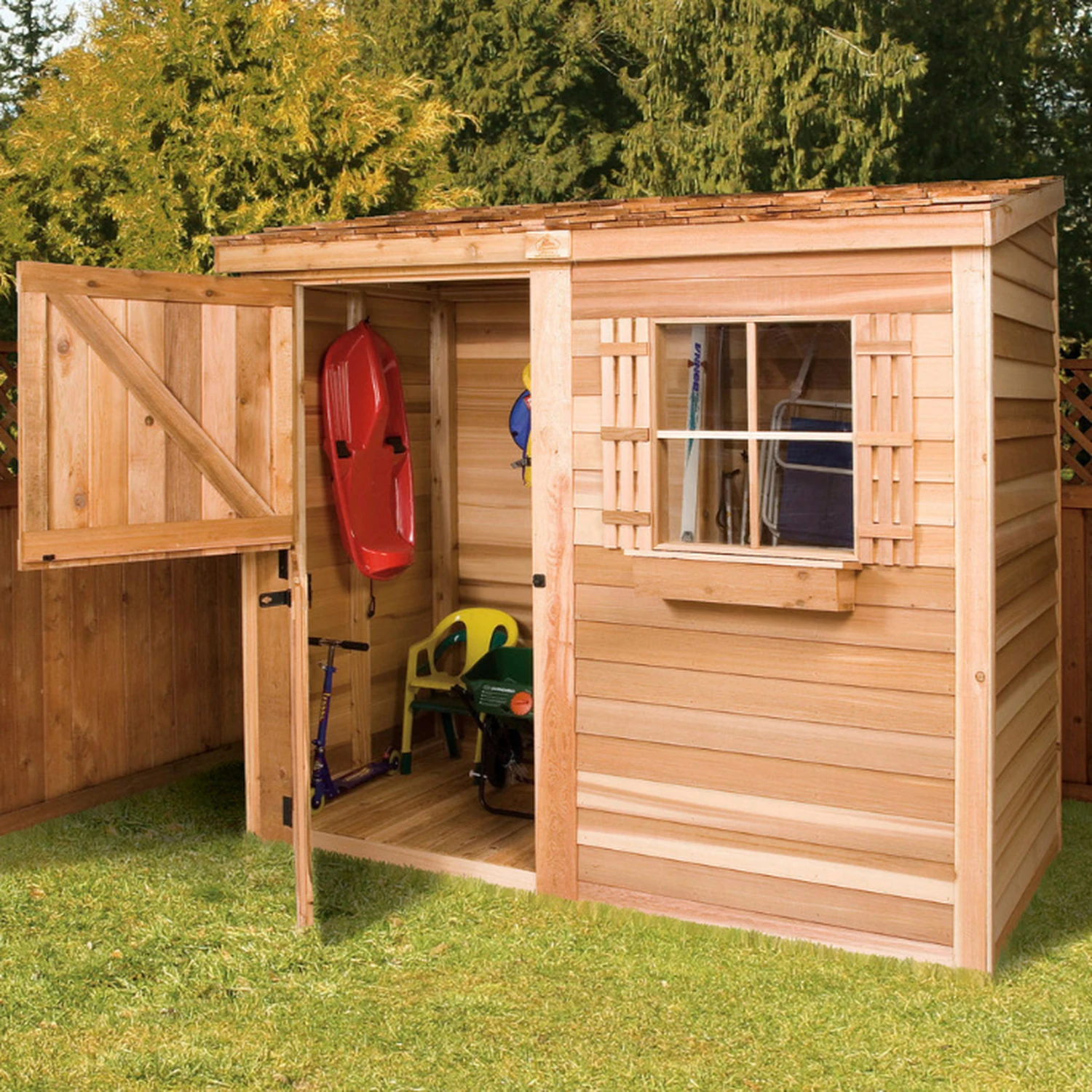
Manufacturers describe their sheds by use, and the descriptions are a good checklist. Cedarshed describes its Bayside lean-to as a heavy-duty storage option for bicycles and garden tools; the Cedarshed Bayside 6 x 3 ft. lean-to is the smallest of its four sizes, with a 36 x 71 inch cedar Dutch door and one fixed window with a planter box.
For gardening work rather than storage, Outdoor Living Today’s 12 x 12 ft. SunShed includes a 16-inch-deep L-shaped workbench, a 31-inch Dutch door, 838 cubic feet of storage capacity and 10 aluminum windows with screens and locks. The maker also lists a 5/8-inch plywood floor on cedar 2 x 4 joists and floor runners.
Those features matter for storage, too:
- Windows that open let you air the shed out after a hot day, which helps with chemical odors and moisture.
- A raised wooden floor keeps bags of soil and seed off the ground.
- A lockable door or cabinet is what EPA’s pesticide advice assumes.
A quick sort before you load the shed
Put the rules above together and most households end up with three piles:
- Never in the shed: propane cylinders, and charcoal or ash that is still warm.
- In the shed, with care: pesticides in their labeled containers behind a lock, and fuel in a proper can kept apart from engines and anything that sparks.
- No special rules from these sources: hand tools, bicycles, pots, hoses and garden furniture cushions.
If the third pile is most of what you own, a smaller shed may do. If the second pile is large, a lockable cabinet inside matters more than floor area.
You can compare all of our current models in the shed collection.
Frequently asked questions
Can I keep a propane tank in my shed?
No. Propane industry safety guidance, republished by the North Carolina Department of Agriculture, rules out keeping a cylinder inside any building or enclosed space, and sheds are named in it.
Is a garden shed a safe place for pesticides?
It can be. EPA’s guidance names a locked cabinet in a garden shed or an airy utility area as a good place, with products kept in their original labeled containers and away from food, animal feed and places that flood.
Where should I keep gasoline for the lawn mower?
EPA says to keep flammable liquids out of the living space and away from ignition sources, and it lists a furnace, a car, a grill and a lawn mower. Use a proper fuel container and keep it apart from engines and anything that sparks.
Can I put charcoal ash in the shed after grilling?
Not while it is warm. NFPA advises letting coals cool completely and then placing them in a metal container with a lid, which should stay outdoors.
What features make a shed better for storage?
Opening windows for airflow, a raised floor that keeps items off the ground and a lockable door or cabinet. Outdoor Living Today’s SunShed, for example, lists 10 aluminum windows with screens and locks and a plywood floor on cedar joists.
Sources
- Propane Education & Research Council safety sheet, via NC Department of Agriculture
- US EPA, Storing Pesticides Safely
- NFPA grilling safety release (Connecticut Commission on Fire Prevention and Control)
- Manufacturer product pages and owner documents: Cedarshed, Outdoor Living Today