
Growing Vines on a Pergola: Which Plants, How Big, What to Watch
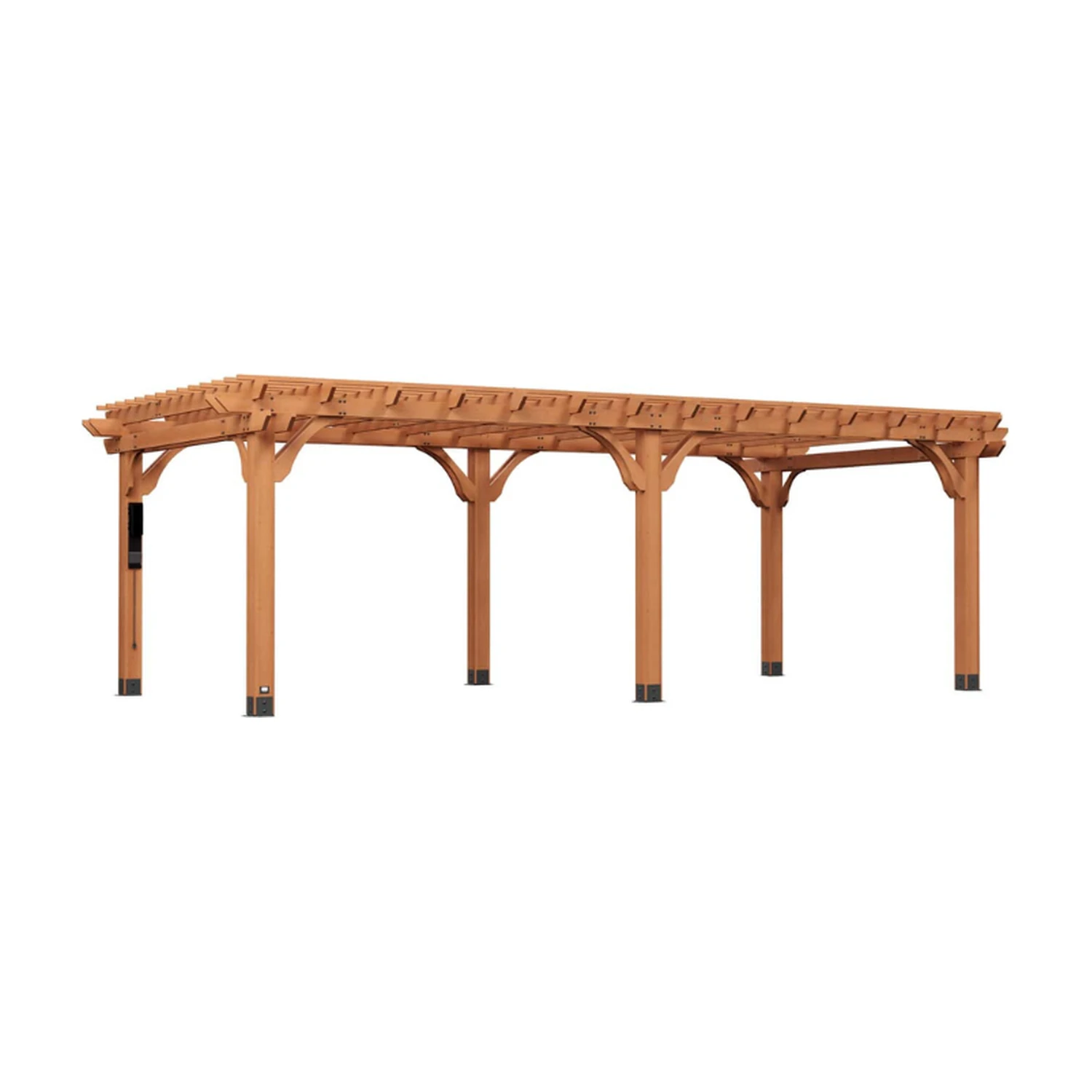
Yes, vines on a pergola are a classic pairing, and some makers design for it: Backyard Discovery says the Beaumont’s trellis roof is suited to hanging potted plants or climbing vines. The plant you choose decides how much work follows. Twining vines such as American wisteria wrap the frame and, per NC State Extension, can reach 15 to 40 feet. Trumpet vine climbs by aerial rootlets that cling to the surface and gets heavy as it matures. Match the plant’s mature size to the frame, keep it pruned, and skip Chinese wisteria, which NC State Extension lists as invasive.
Two ways a vine holds on
How a plant climbs tells you how it will treat your pergola.
Twiners wrap their stems around a support. NC State Extension notes that both Chinese and American wisteria twine counterclockwise. A twiner needs something narrow to circle, such as a post, a wire or a rafter edge, and you can guide it with ties while it is young.
Rootlet climbers grip the surface itself. Trumpet vine (Campsis radicans) attaches to structures with aerial rootlets, according to NC State Extension. Once established it holds on without help. That also means you cannot easily slide it off a board for repainting or staining.
A pergola you plan to refinish suits a twiner trained on wires or ties better than a plant that roots into the wood surface.
Size the plant to the frame
NC State Extension’s plant database gives these mature sizes and notes:
| Plant | Mature height | Mature width | Notes from NC State Extension |
|---|---|---|---|
| American wisteria (Wisteria frutescens) | 15-40 ft | 4-8 ft | Native from Virginia to Illinois and south to Florida and Texas; best on a sturdy support |
| Chinese wisteria (Wisteria sinensis) | 10-25 ft | 4-30 ft | Listed as invasive in North Carolina; forms dense thickets |
| Trumpet vine (Campsis radicans) | 30-40 ft | 4-10 ft | Native to the central and eastern US; aggressive spreader |
Every one of these outgrows a small pergola if left alone. The extension pages say the same thing in different words: American wisteria is best grown on a sturdy surface that can carry its weight, and trumpet vine needs sturdy structures because mature plants become considerably heavy.
A larger cedar frame is the better host. The Beaumont 24 x 12 ft. pergola is built from 100 percent cedar with 6 x 6 inch posts, dual structural cross beams and a multi-level trellis roof. A compact frame like the DuraTrel Kingston 7 x 7 ft. vinyl pergola stands on 4-inch posts; a lighter annual climber or a plant kept small by pruning is a more realistic match there.
Why skip Chinese wisteria
NC State Extension describes Chinese wisteria as a rapid grower considered an invasive weed. It notes that the plant needs space and sturdy supports, and it recommends choosing native alternatives instead. American wisteria is the obvious swap: it twines the same way, flowers in purple and blue shades, and is native across much of the eastern and southern US.
Trumpet vine is native too, but it brings its own problem. NC State Extension says it suckers heavily from underground runners and self-seeds freely, often forming dense colonies, and it suggests planting it where you can mow around it. Some people also get skin redness and itching from touching the leaves, which is why one of its common names is cow-itch vine.
Light, flowering and pruning
Pergolas are sunny places, which suits these plants:
- American wisteria needs full sun for its best flowering and cannot grow in full shade. It may flower in the second or third year after planting, sometimes later, and needs regular pruning to control size and encourage blooms.
- Trumpet vine grows in full sun to partial shade but needs good sun to flower well. It blooms on new growth, so pruning it in early spring does not cost you that year’s flowers.
Plan access before you plant. You will be pruning overhead, so leave room for a stable ladder on at least one side of each post.
Keep the pergola itself in good shape
A vine hides the frame, so check it on a schedule. Backyard Discovery’s owner booklet tells owners to check and tighten hardware at the start of each season and during it, because wood expands and contracts. The same booklet asks owners to inspect wooden parts regularly. It also warns that modifying the structure can damage its integrity, so use ties, clips and wires that do not mean drilling or cutting the frame.
On vinyl, the upkeep is different. DuraTrel says its vinyl pergolas never need sanding, painting or staining and can be cleaned with a garden hose. Rinse it before the vine leafs out, while you can still reach every surface.
Browse our pergola collection to compare frame materials and post sizes before you choose a plant.
Frequently asked questions
Can a pergola support a wisteria vine?
A sturdy one can. NC State Extension says American wisteria is best grown on a sturdy surface that supports its weight. Choose a frame with heavy posts and beams, and favor American wisteria over Chinese wisteria, which the extension service lists as invasive.
What is the difference between twining vines and clinging vines?
Twiners such as wisteria wrap their stems around a support. Clinging vines such as trumpet vine attach to surfaces with aerial rootlets, which makes them harder to pull away when the wood needs refinishing.
How tall does American wisteria grow?
NC State Extension lists American wisteria at 15 to 40 feet tall and 4 to 8 feet wide at maturity, with flowers possibly appearing in the second or third year after planting.
When should I prune trumpet vine on a pergola?
NC State Extension notes that trumpet vine blooms on new growth, so pruning in early spring does not affect that year’s flowering.
Do vines damage a vinyl pergola?
Our sources do not rate vine damage on vinyl. DuraTrel says its vinyl pergolas clean up with a garden hose and never need painting, so rinse the frame before the vine leafs out and keep growth trimmed so you can reach it.
Sources
- NC State Extension Plant Toolbox, Wisteria sinensis
- NC State Extension Plant Toolbox, Wisteria frutescens
- NC State Extension Plant Toolbox, Campsis radicans
- Manufacturer product pages and owner documents: Backyard Discovery, DuraTrel